Padiflow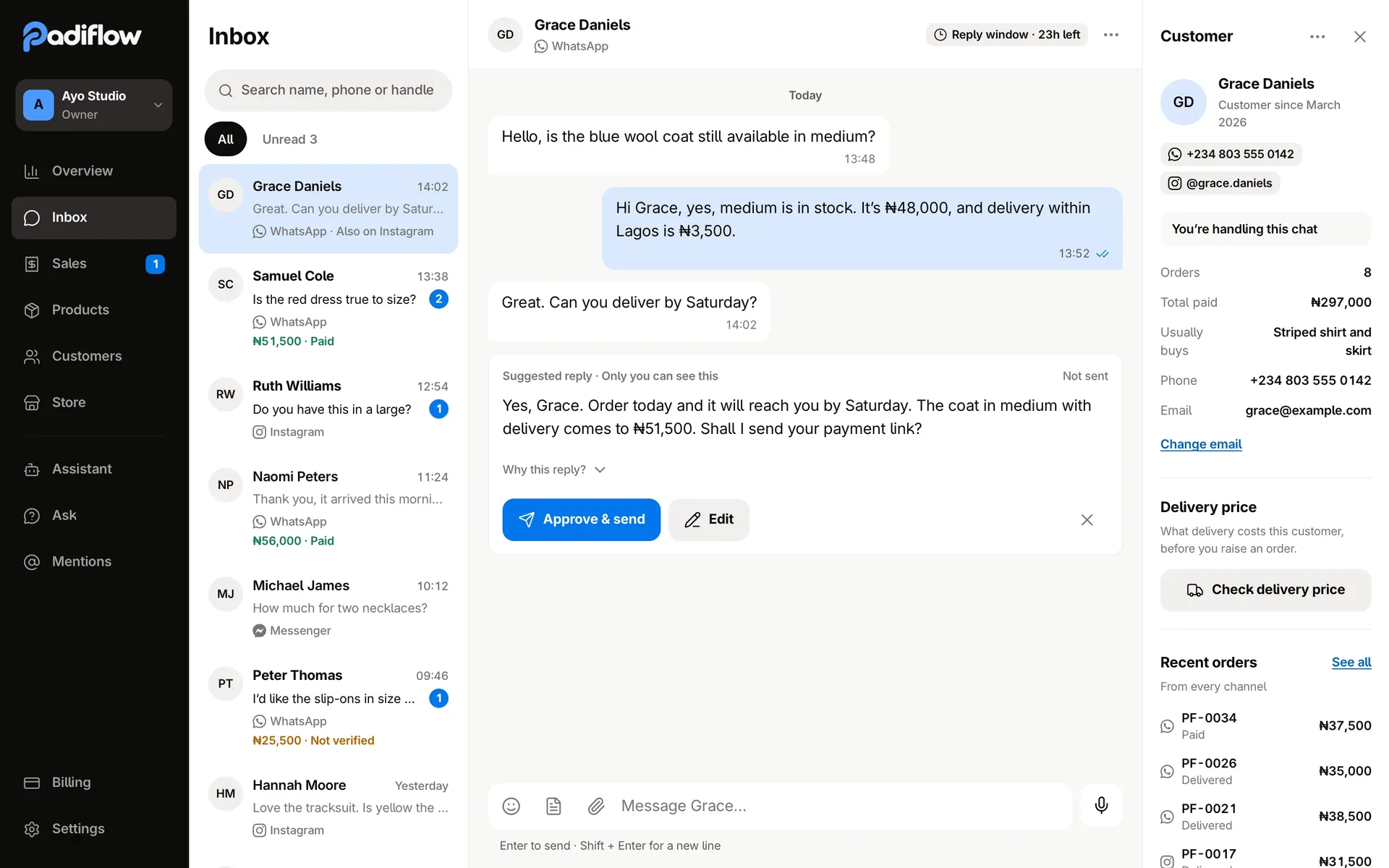
Our product.
Padiflow puts your WhatsApp, Instagram, Facebook Messenger and Telegram chats in one inbox, keeps your customers, sales, orders and inventory together, and gets you paid.
Visit padiflow.com
Get it onGoogle PlayComing soon to theApp Store
What it does.
- Inbox
- WhatsApp, Instagram, Facebook Messenger and Telegram in one live list.
- AI
- Suggested replies, follow-ups and answers about the business. A suggested reply is a draft until a person approves it.
- Customers
- Everyone who chatted or bought, with their channels, orders and notes, and broadcasts to customers who opted in.
- Sales
- Deals move through stages as chats and payments happen.
- Orders and delivery
- Every order from chat, store and counter, followed through to delivery.
- Inventory
- Stock for every product and variant, down to the last one, with low-stock alerts.
- Online store
- Each business’s own store, not a shared marketplace.
- Payments
- Customers pay in Naira, and the payment is confirmed automatically.
- Counter
- Scan a barcode or pick from the catalogue, in the same records as chat orders.
On Android and the web.
The Android app is on Google Play, and the iPhone app is coming soon. On a computer, Padiflow runs in the browser at app.padiflow.com.
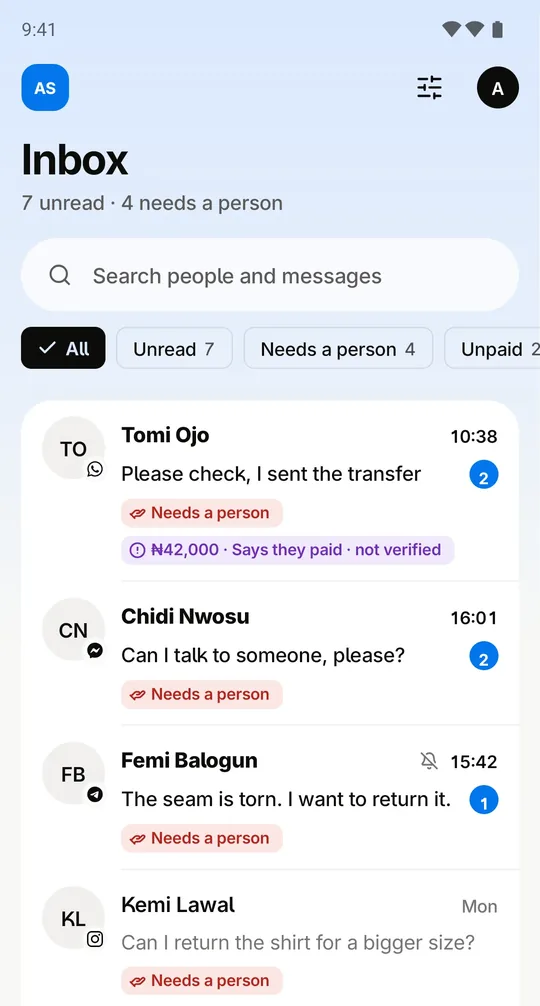
The inbox 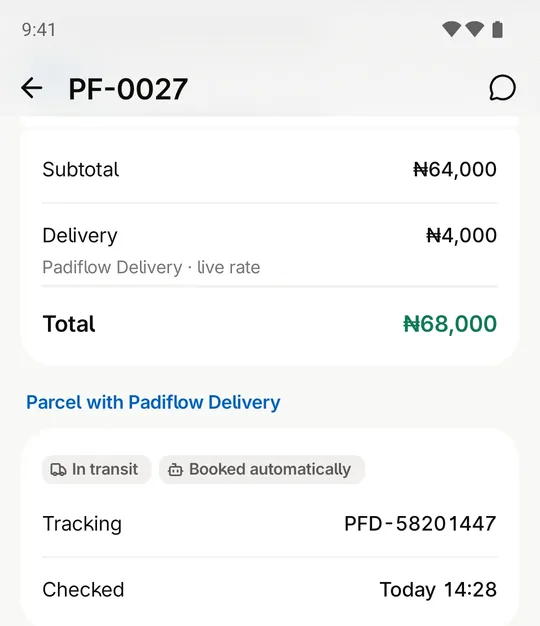
An order 
A store
Plans.
Starter is free. Plus and Growth add more seats, channels and features, and bill by the quarter or the year.
Who holds the money.
Padiflow is a technology provider, never the seller of a business’s goods. The money in each business’s account belongs to that business, a bank licensed by the Central Bank of Nigeria holds it, and it is never pooled with other businesses’ money or with ours.